
Trust Registration
Your Purpose Deserves a Legal Life — Register the Trust.
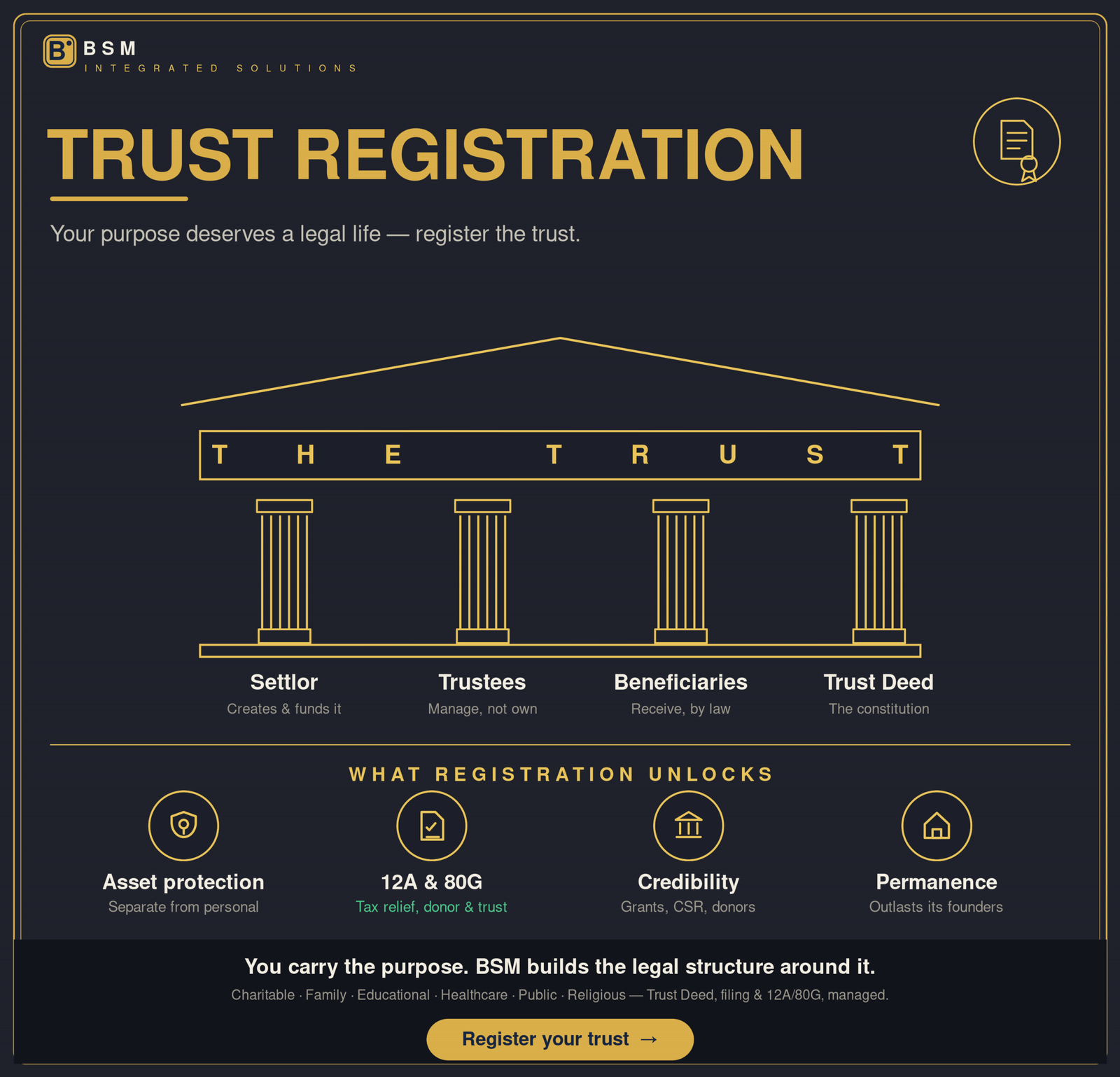
Good intentions are personal. A registered trust is permanent. A trust is a legal arrangement where a Settlor the property owner transfers assets to Trustees, who hold and manage them for the benefit of designated Beneficiaries or for public charitable purposes.
Four Roles, One Document — The Architecture That Protects Every Intention.
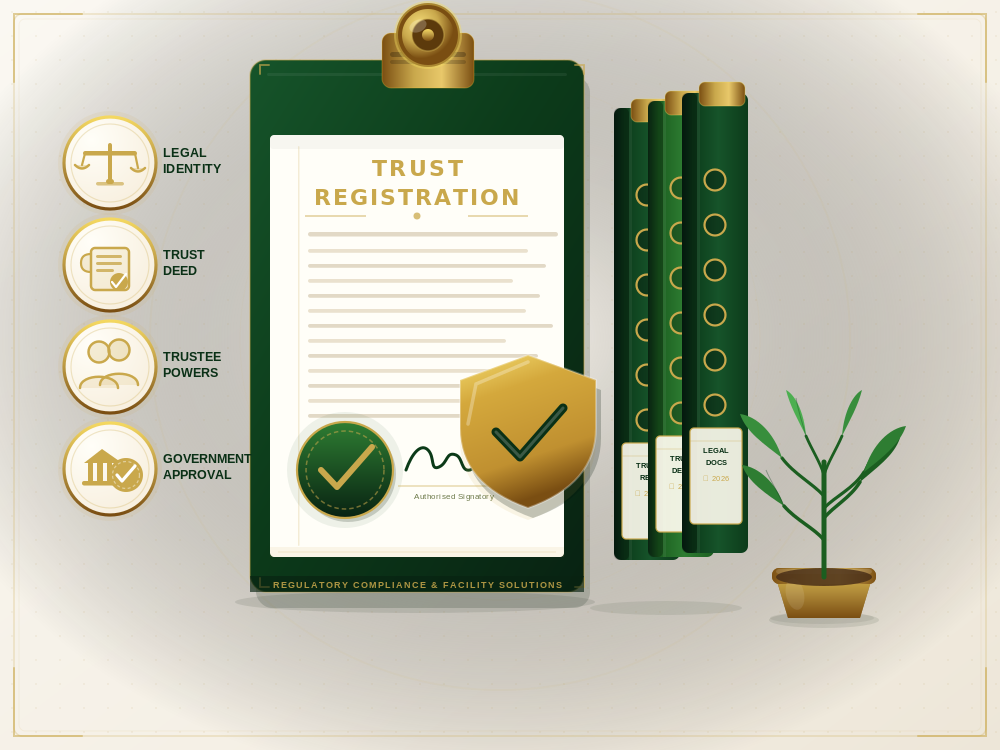
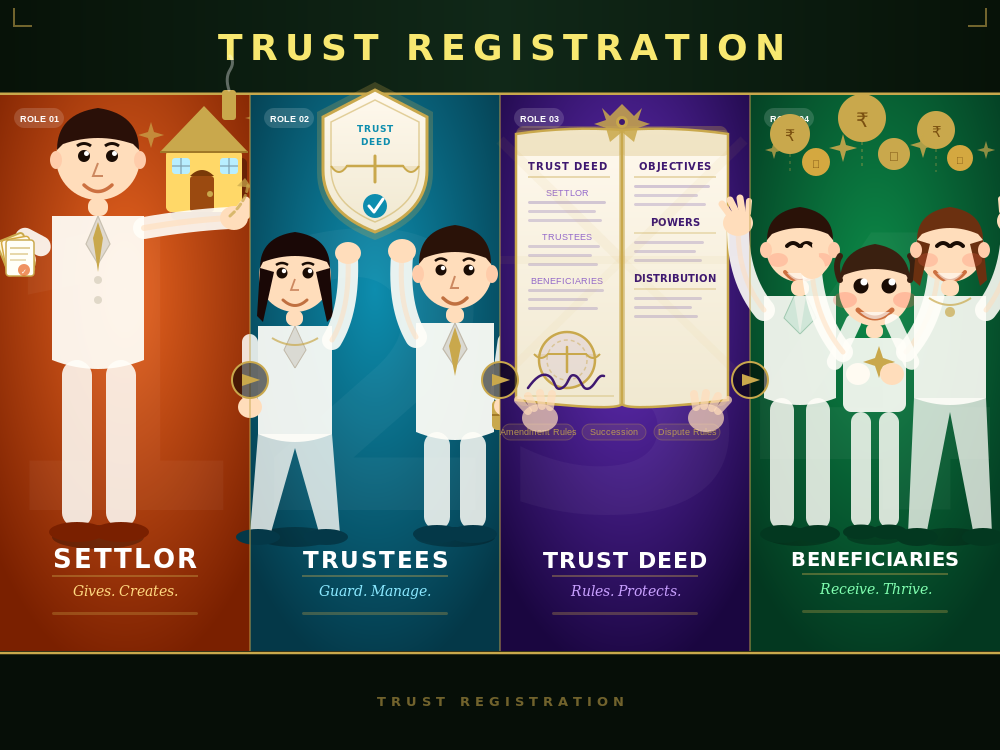
Every trust rests on four precisely defined elements. Understanding them is the difference between a trust that works for decades and one that collapses under dispute:
▸ Settlor (Author) — The person creating the trust by transferring property or assets. The trust begins here — with the settlor’s decision to separate personal ownership from purpose.
▸ Trustees — Legal custodians managing trust property according to Trust Deed provisions. They hold authority without personal ownership — power in service of the purpose, not themselves.
▸ Beneficiaries — Recipients of trust benefits as specified in the Trust Deed. Their entitlements are defined, protected, and enforceable by law.
▸ Trust Deed — The foundational legal document governing trust operations and defining all relationships. Every right, every power, every boundary lives here.
The Trust Deed specifies trust objectives, beneficiary categories, trustee powers, property management authorities, investment capabilities, distribution methods, and amendment procedures. A comprehensive Trust Deed provides clear guidance preventing disputes and ensuring aligned trust operations with the settlor’s intentions — across years, decades, and generations.
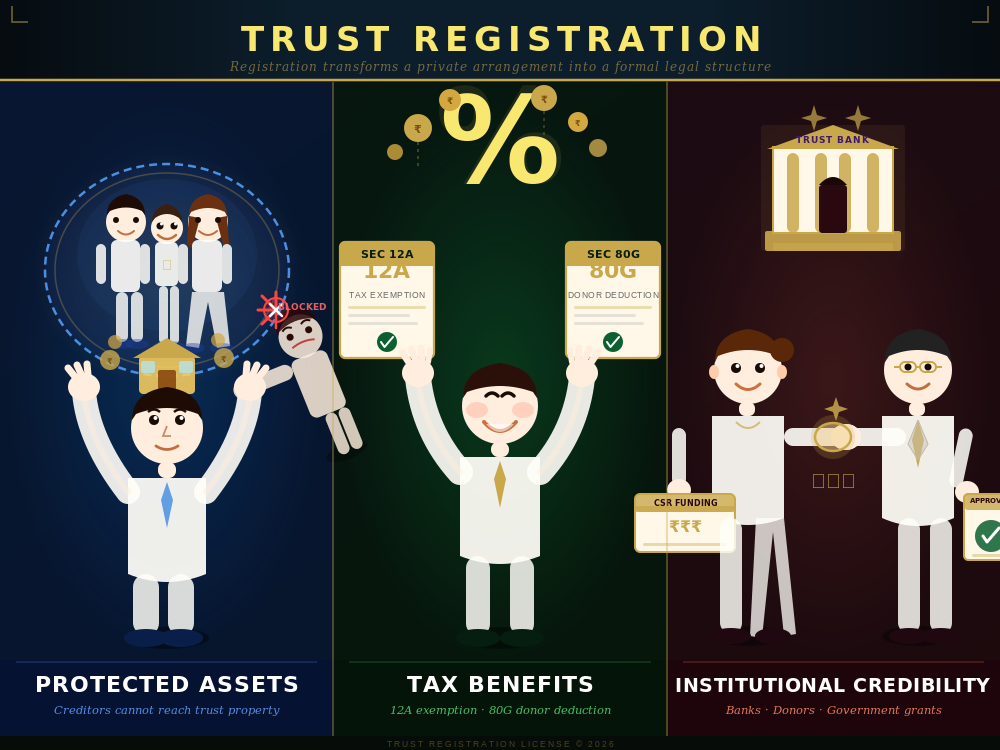
Protected Assets. Tax Benefits. Institutional Credibility.
Registration transforms a private arrangement into a formal legal structure and that transformation unlocks capabilities no informal trust can access.
Trust registration enables formal asset management through a legal framework that separates trust property from personal assets. Trustees own property in the trust’s name meaning personal creditors cannot reach it, and every asset stays dedicated to its intended beneficiary. For charitable trusts, the doors that open are extraordinary: government grants, CSR funding, donations, and tax exemptions that are essential for charitable work expansion all become accessible the moment registration is in place. Registration signals institutional legitimacy and that signal alone enables donor confidence and larger contribution amounts. The financial structure goes deeper: Trust registration enables 12A and 80G exemptions, providing tax deductions for donors and direct organizational tax benefits that compound over time. Banks prefer registered trusts for financial transactions, establishing the kind of credibility that attracts serious institutional relationships. And tax exemptions do more than save money they free up resources that go directly to the purpose rather than the tax obligation.
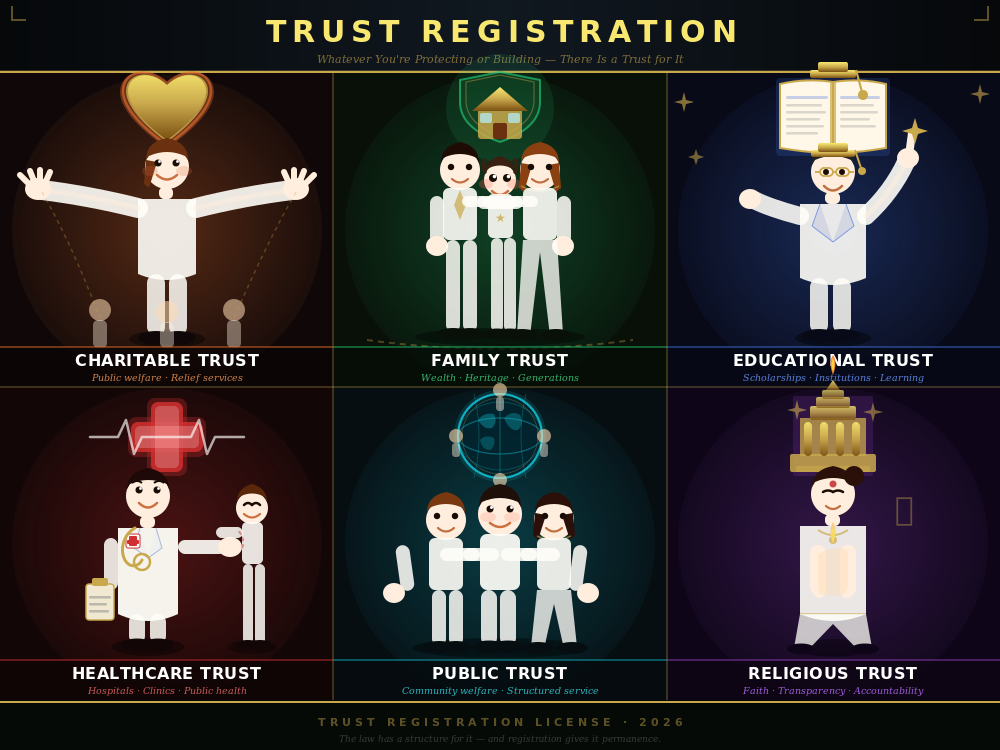
Whatever You’re Protecting or Building — There Is a Trust for It.
▸ Charitable Trusts Established for public charitable purposes providing relief services and welfare the legal home for every act of organized generosity.
▸Family Trusts Created for family member benefit managing inherited property or family assets protecting wealth across generations with clarity and legal structure.
▸ Educational Trusts Supporting educational institutions and scholarship programs turning a commitment to learning into an institution that outlasts its founders.
▸ Healthcare Trusts Establishing hospitals, clinics, or healthcare facilities for public benefit giving medical missions the permanence and credibility they deserve.
▸ Public Trusts Established for general public benefit and community welfare purposes structured service to society, recognized and protected by law.
▸ Religious Trusts Supporting religious institutions and spiritual welfare activities ensuring places of faith are governed with transparency, accountability, and legal standing.
Whatever brought you to this page the law has a structure for it, and registration gives it permanence.
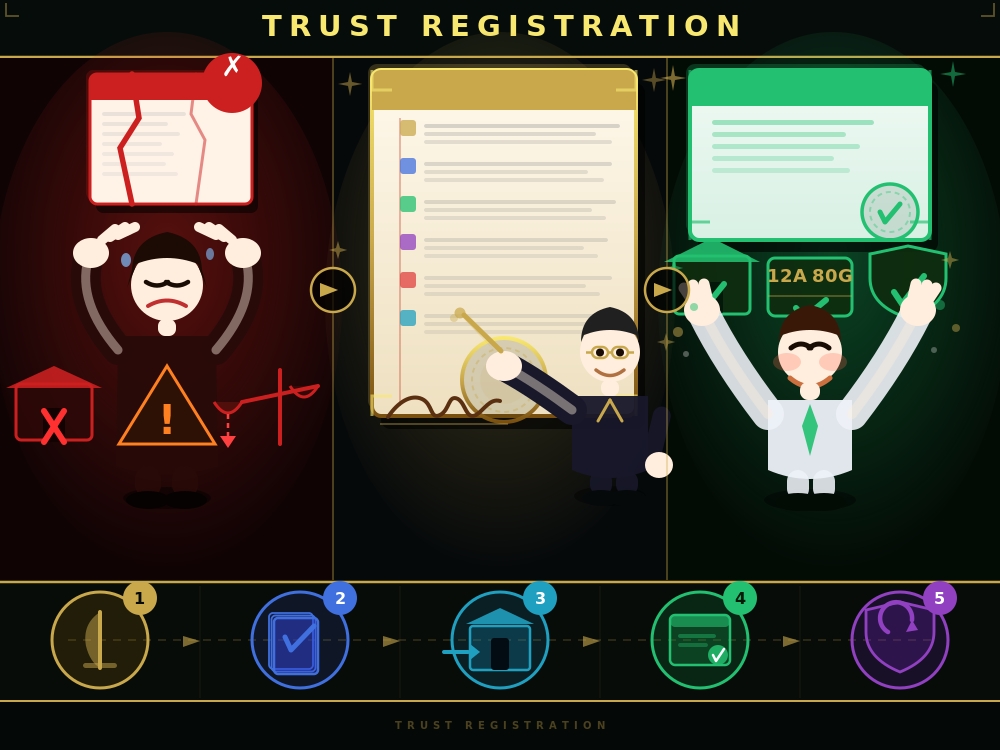
You Built This for a Purpose — Not for Paperwork.
A trust is only as strong as the document that governs it. Drafting errors in a Trust Deed don’t surface immediately they surface in disputes, years later, when beneficiaries challenge trustee decisions, when tax authorities question exemption eligibility, or when a bank refuses to open an account because the registration is defective. The Trust Deed is not a formality. It is the constitution of your trust and it needs to be right the first time. BSM handles your Trust Registration end to end: Trust Deed drafted to satisfy the Registrar and withstand legal scrutiny, all documentation prepared correctly, filing managed through the appropriate authority, and follow-through until the registration certificate is in your hands. We also provide ongoing compliance support — filings, renewals, and records that keep your trust legally active and eligible for the exemptions it was registered to receive. You carry the purpose. BSM builds the legal structure around it — so the cause you started can keep going long after the paperwork is done.
Talk to BSM Today
Zero obligation · Compliance experts · Same-day response