

Pollution Control Approval
The Approval That Lets Industry and Environment Share the Same Address.
Pollution Control Approval is far more than a regulatory requirement or a certificate on your wall.
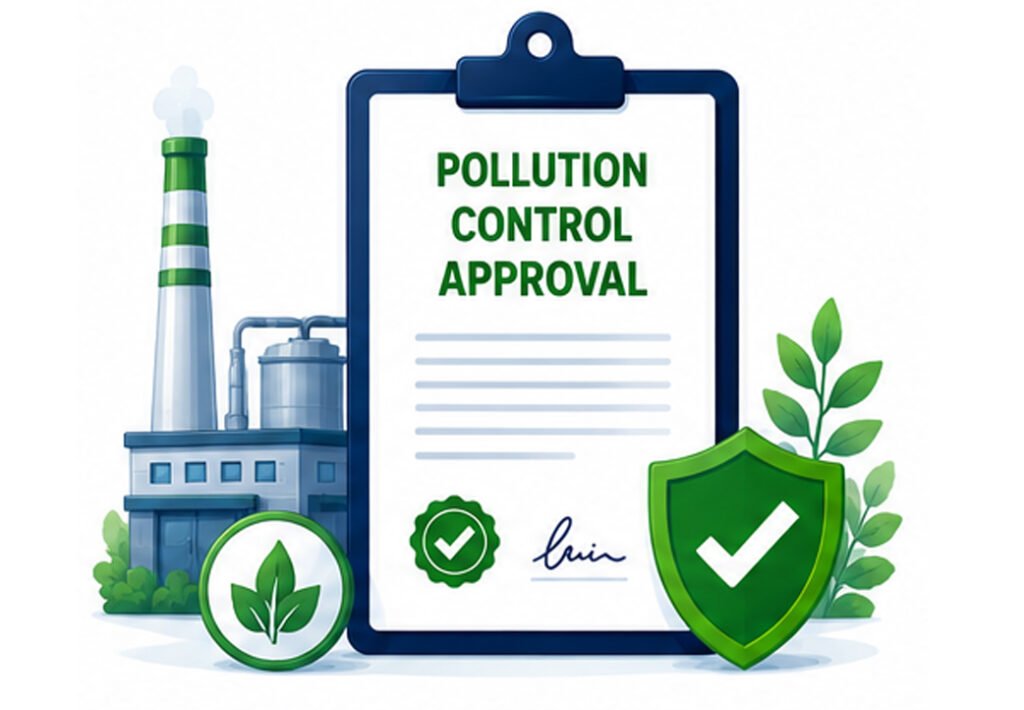
From Steel Mills to Cloud Kitchens — If Your Operations Touch the Environment, You Are on the Board’s List.
Environmental compliance spans a far wider range of businesses than most owners assume. It covers complex manufacturing and processing operations — chemical plants, steel mills, textile units, pharmaceutical manufacturers, petrochemical facilities, paper mills, food processing units, and refineries — and applies equally to service establishments: hotels, restaurants, cloud kitchens, hospitals, diagnostic labs, and large-scale resorts. The Pollution Control Board classifies every industry by its pollution potential, and your category decides everything — the consents you need, the conditions you carry, and the scrutiny you receive:
▸ Red Category — highly polluting industries, subject to the most stringent controls, monitoring, and inspection schedules.
▸ Orange Category — moderately polluting industries, with substantial consent conditions and periodic compliance verification.
▸ Green Category — lower pollution potential, with simplified procedures and lighter conditions.
Knowing your correct category before you apply is half the battle — the wrong classification means either failed scrutiny or compliance burdens you never needed to carry.
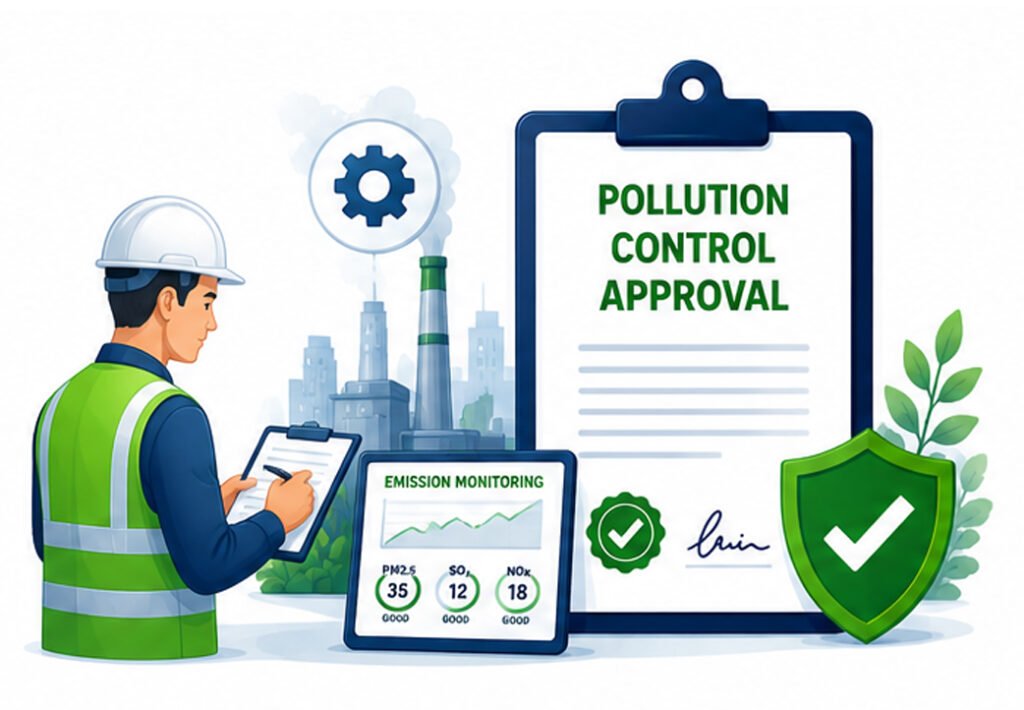
Approval Before the First Brick — Build on Certainty, Not Assumption.
Consent to Establish (CTE) is the critical first authorization, required before any physical construction begins at your facility. It is the strategic cornerstone of environmental compliance: a rigorous evaluation of your site selection, architectural layout, planned pollution prevention measures, and environmental management systems — conducted while changes still cost nothing but ink. The application demands comprehensive documentation: detailed site plans, architectural drawings, and complete pollution control system design specifications. Get the CTE right, and every later stage builds on approved ground. Get it wrong, and you may be redesigning a half-built facility — the most expensive drawing board any business returns to.
The Final Green Light — Proof Your Facility Is Ready to Produce, Responsibly.
Consent to Operate (CTO) is the final regulatory gateway — the definitive authorization confirming your facility’s readiness to commence commercial operations. It is granted only after comprehensive verification that every pollution control system is installed, operational, and performing to design specification — that your site can handle raw materials, run production safely, and control every pollutant it generates. Filed after construction completion and full
equipment installation, the CTO is more than permission: it is official proof of your operational integrity — independently verified evidence that your environmental safeguards work, shown to every customer, investor, and authority who asks. The day your CTO is granted is the day your facility stops being a project and starts being a business.
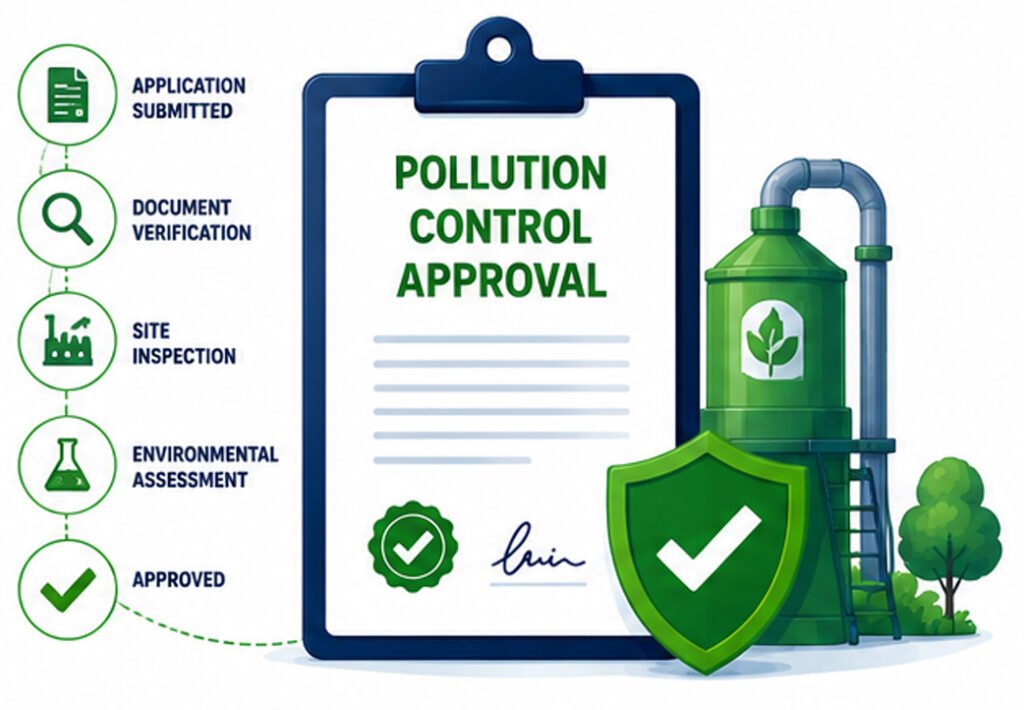
CTE in 30–60 Days. CTO in 15–30 Days. Fear of Environmental Violations — Gone.
Most manufacturers operate with a quiet, constant fear of environmental enforcement. BSM eliminates it completely. We manage your entire pollution control journey — correct category classification, CTE documentation and approval, pollution control system compliance, CTO verification and grant, and the renewals and conditions that follow. Our applications are engineered for first-pass approval: CTE secured in 30–60 days and CTO in 15–30 days, so your facility is built, commissioned, and earning on schedule. After approval, our comprehensive pollution management keeps your compliance perfect and your documentation defensible — monitoring, records, and authority coordination handled end to end. Operate boldly. We’ve already handled what you used to fear.
Talk to BSM Today
Zero obligation · Compliance experts · Same-day response